
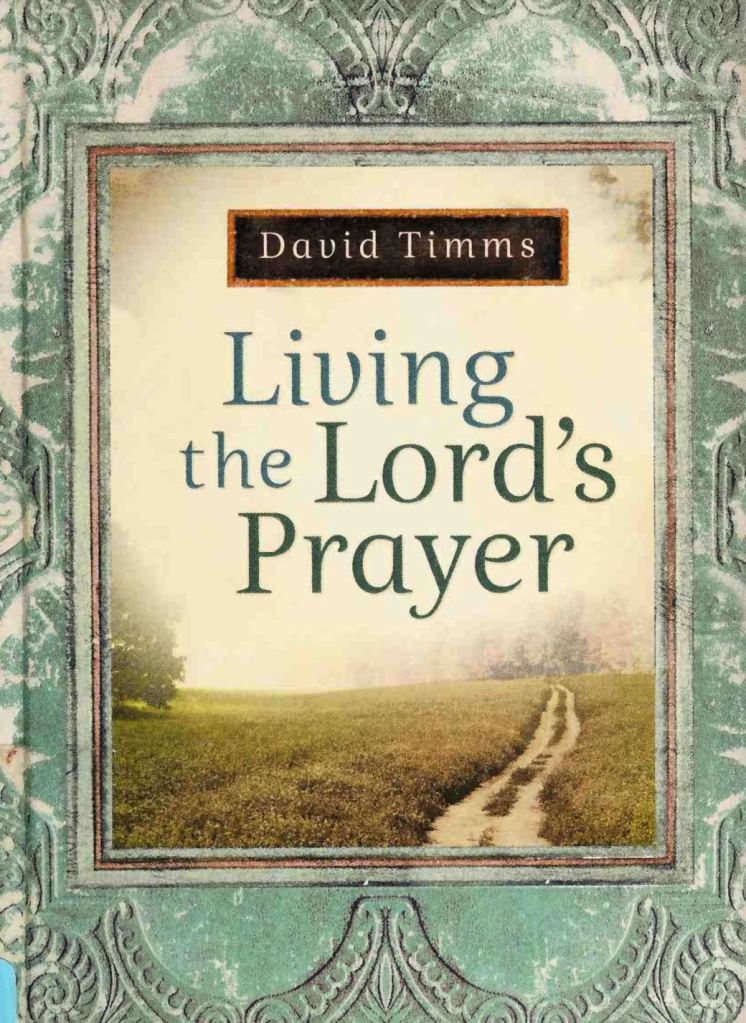
Surely God did not intend the abundant life to be drab, boring, empty, or tedious. We harbor deep suspicious that something deeper and vaster lies beyond our daily routines.
Many of us share the deep yearning to explore the spiritual realm more fully. We want to know the deep interior of God.
A SHARED HUNGER pages 15-18)
For centuries Christian men and women have desired a deeper walk with Christ.
For two thousand years various Christian mystics and devout believers have advocated a range of pathways to a deeper relationships with God. They shared our hunger for the holy.
If we summarize [the] saints of the past, we develop quite a catalog of possible pathways [to God]. We draw nearer to God through:
Seriousness, obedience, and humility;
Spiritual disciplines of silence, solitude, fasting, study, and more;
Encountering the love of God;
Sharing the sufferings of Christ;
Crossing metaphorical bridges and entering metaphorical castles;
Enduring the purging work of God in our lives;
Praying the Scriptures;
Studying the Scriptures;
Spiritual gifts and revivalism;
Devotion to the body of Christ;
Meditative prayer and social engagement;
Belovedness and brokeness.
The vast array of insights [by the saints, and great and influential thinkers of the past] inspire, but also confuse us. Every tidbit of wisdom sounds good and right, but without a fixed point of reference we become rudderless in a sea of generic spirituality. Our hearts resonate with those who have walked close to God, but we lack the experience or wisdom to accurately access their advice.
Nevertheless, a fixed reference point does exist – in Scripture. We find a ready-made summary not in the saints or scholars of the past, but in Christ himself.
THE LORD”S PRAYER (pages 20-21)
Jesus lays out what we commonly call the Lord’s Prayer, and in it He provides the greatest Christian teaching of the centuries on spiritual formation.
[In the prayer], He outlines life-giving attitudes and paradigms. We also encounter a prayer that does not seek to get God’s attention but to give our attention to Him.
The Prayer functions less as a chant and more as a challenge [because] memorizing ten short lines poses little difficulty of most of us [but] the concepts and insights have the capacity to remold our lives entirely. Overstatement? Exaggeration? Not at all. Indeed, this prayer offers a simple framework that steers us through all the suggestions of the ages and into the very intimacy with Christ that hearts desire. It reveals the building blocks for authentic spiritual formation.
SPIRITUAL FORMATION (pages 21-23)
Will Hernandez provides a helpful definition. He describes spiritual formation as “the process of being with Christ in order to become like Christ and consequently live for Christ.” His succinct definition captures three vital elements.
Being with Christ;
Becoming like Christ;
Living for Christ.
Spiritual formation is not one or even two of these three elements. True formation, as modeled by Jesus and reflected in the [Lord’s] Prayer, incorporates some measure of all three parts of the definition. Spiritual formation remains incomplete when it becomes fixated on meditation (“being with”). But it also fails when it focuses entirely on character adjustment or behavior modification (“becoming like”). Similarly, the process falters it simply means busyness in the kingdom (“living for”).
The teaching contains in the Lord’s Prayer catapults us toward complete transformation. While we soak up the wisdom of godly men and men throughout Christian history, they would certainly defer to the wisdom of Christ expressed in the Prayer.
Ultimately, the Lord’s Prayer reveals more about how to live than how to pray.
David Timms teaches New Testament and Theology and serves as the Dean of the Faculty of Theology and of the School of Christian Leadership at William Jessup University in northern California. Australian by birth, David has been a church planter, pastor, and trainer of pastors for over thirty years. He publishes a blog Because of Grace, that shares his reflections on Christian leadership and spiritual formation. He and his wife, Kim, have three sons and live in Rocklin, California.


 The Lord's Prayer: A Mathematician's Creed