The Lord’s Prayer: The Tsunami from the 180th Meridian

Psalm 113 is a beautiful prayer, urging us to praise the Lord our God always.

Psalm 113
1 Praise the Lord.

Praise the Lord, you his servants;
praise the name of the Lord.
2 Let the name of the Lord be praised,
both now and forevermore.

3 From the rising of the sun to the place where it sets,
the name of the Lord is to be praised.

4 The Lord is exalted over all the nations,
his glory above the heavens.
5 Who is like the Lord our God,
the One who sits enthroned on high,
6 who stoops down to look
on the heavens and the earth?

7 He raises the poor from the dust
and lifts the needy from the ash heap;
8 he seats them with princes,
with the princes of his people.
9 He settles the childless woman in her home
as a happy mother of children.

Praise the Lord.

Since the Book of Psalm is the 19th book of the Bible, the identifier of Psalm 113:3 is 19+113+3=135. Hence, we arrive at the following conclusion

CONCLUSION. Through the Lord’s Prayer, we can praise the name of the Lord from the rising of the Sun to the place where it sets.

Discussions

Indeed, assume that at the Lord’s Prayer prayer times, namely 10.35 am, 10.53 am, 1.35 pm, 1.53 pm, 3.15 pm, 3.51 pm, 5.13 pm, 5.31 pm (see book for derivation), the Lord’s Prayer begins in Fiji, which, by virtue of its Coordinated Universal Time (UTC+12) and its coordinate on the 180th meridian (16o9’S 180oE) is the first country to see the Sun rises. Then like a tsunami, emanating from Fiji, the Lord’s Prayer reverberates around the world. As the Lord’s Prayer follows the Sun into new time zones, believers take over the prayer baton in the global glorification of the Father and the Son, continually, unending. Consequently, the lives of billions of people across the planet will be uplifted and changed for the better, a fitting preparation of humankind for the return of Jesus Christ (Luke 12:35 – 36, NIV):

35 Be dressed ready for service and keep your lamps burning, 36 like servants waiting for their master to return from a wedding banquet, so that when he comes and knocks they can immediately open the door for him.

With the Lord’s Prayer constantly on our lips, our eyes are bound to be fixed continually on Jesus Christ who is the Author and Finisher of our faith (Hebrews 12:2).

May our Father in Heaven Arise (Psalm 68)

Psalm 68 is an incredible prayer as it expresses our confidence that our heavenly God, our Father the Almighty will remove tenacious obstacles in our lives. It has all the elements of a powerful prayer against our foes; (1) expression of our hope that God will sow confusion among our enemies (v.1-2); (2) rebuking evil (v.30-31), and (3) praising God for displaying His power against the enemies resulting in victory (v.32 – 35). The New International Version is provided below:

Psalm 68

May God arise, may his enemies be scattered;
    may his foes flee before him.
May you blow them away like smoke—
    as wax melts before the fire,
    may the wicked perish before God.
But may the righteous be glad
    and rejoice before God;
    may they be happy and joyful.

Sing to God, sing in praise of his name,
    extol him who rides on the clouds;
    rejoice before him—his name is the Lord.
A father to the fatherless, a defender of widows,
    is God in his holy dwelling.
God sets the lonely in families,
    he leads out the prisoners with singing;
    but the rebellious live in a sun-scorched land.

When you, God, went out before your people,
    when you marched through the wilderness,
the earth shook, the heavens poured down rain,
    before God, the One of Sinai,
    before God, the God of Israel.
You gave abundant showers, O God;
    you refreshed your weary inheritance.
10 Your people settled in it,
    and from your bounty, God, you provided for the poor.

11 The Lord announces the word,
    and the women who proclaim it are a mighty throng:
12 “Kings and armies flee in haste;
    the women at home divide the plunder.
13 Even while you sleep among the sheep pens,
    the wings of my dove are sheathed with silver,
    its feathers with shining gold.”
14 When the Almighty scattered the kings in the land,
    it was like snow fallen on Mount Zalmon.

15 Mount Bashan, majestic mountain,
    Mount Bashan, rugged mountain,
16 why gaze in envy, you rugged mountain,
    at the mountain where God chooses to reign,
    where the Lord himself will dwell forever?
17 The chariots of God are tens of thousands
    and thousands of thousands;
    the Lord has come from Sinai into his sanctuary.
18 When you ascended on high,
    you took many captives;
    you received gifts from people,
even from the rebellious—
    that you, Lord God, might dwell there.

19 Praise be to the Lord, to God our Savior,
    who daily bears our burdens.
20 Our God is a God who saves;
    from the Sovereign Lord comes escape from death.
21 Surely God will crush the heads of his enemies,
    the hairy crowns of those who go on in their sins.
22 The Lord says, “I will bring them from Bashan;
    I will bring them from the depths of the sea,
23 that your feet may wade in the blood of your foes,
    while the tongues of your dogs have their share.”

24 Your procession, God, has come into view,
    the procession of my God and King into the sanctuary.
25 In front are the singers, after them the musicians;
    with them are the young women playing the timbrels.
26 Praise God in the great congregation;
    praise the Lord in the assembly of Israel.
27 There is the little tribe of Benjamin, leading them,
    there the great throng of Judah’s princes,
    and there the princes of Zebulun and of Naphtali.

28 Summon your power, God;
    show us your strength, our God, as you have done before.
29 Because of your temple at Jerusalem
    kings will bring you gifts.
30 Rebuke the beast among the reeds,
    the herd of bulls among the calves of the nations.
Humbled, may the beast bring bars of silver.
    Scatter the nations who delight in war.
31 Envoys will come from Egypt;
    Cush will submit herself to God.

32 Sing to God, you kingdoms of the earth,
    sing praise to the Lord,
33 to him who rides across the highest heavens, the ancient heavens,
    who thunders with mighty voice.
34 Proclaim the power of God,
    whose majesty is over Israel,
    whose power is in the heavens.
35 You, God, are awesome in your sanctuary;
    the God of Israel gives power and strength to his people.

Praise be to God!

Since the Book of Psalms is the 19th book in the Bible, the identifier of Psalm 68 is 3675. The Euler Totient function, evaluated at 3675, is 1680 = 168 x 10. Recalling that 168 is the identifier of the Lord’s Prayer in the Gospel of Luke, we arrive at the following conclusion:

Conclusion. The Lord’s Prayer is a means to express our hope that God will sow confusion among our enemies, to rebuke evil, and to praise God for displaying His power against the enemies resulting in victory.

Discussions

Psalm 68 and the Lord’s Prayer can be linked through their shared themes of God’s sovereignty, provision, and deliverance.

  1. Acknowledgment of God’s Sovereignty:
    • The Lord’s Prayer starts with “Our Father in heaven, hallowed be your name,” which acknowledges God’s holiness and sovereignty.
    • Psalm 68:4 says, “Sing to God, sing in praise of his name, extol him who rides on the clouds; rejoice before him—his name is the Lord.” This also exalts God’s name and acknowledges His rule over the earth.
  2. Kingdom and Power:
    • The Lord’s Prayer requests “Your kingdom come, your will be done, on earth as it is in heaven,” praying for God’s rule and will to be established.
    • Psalm 68:1-2 speaks of God’s enemies being scattered and the wicked perishing, which can be seen as a call for God’s righteous kingdom to prevail against evil.
  3. Provision and Support:
    • The prayer Jesus taught asks for daily provision: “Give us today our daily bread.”
    • Psalm 68:9 speaks of God providing for the needy: “You gave abundant showers, O God; you refreshed your weary inheritance.”
  4. Deliverance and Protection:
    • “And lead us not into temptation, but deliver us from the evil one,” from the Lord’s Prayer, seeks protection and deliverance from sin and evil.
    • Psalm 68 throughout talks about God’s might in protecting and delivering His people, as in verse 20: “Our God is a God who saves; from the Sovereign Lord comes escape from death.”
  5. The Final Doxology:
    • The doxology in some versions of the Lord’s Prayer—”For yours is the kingdom, and the power, and the glory, forever”—echoes the themes of praise found in Psalm 68:34-35, “Proclaim the power of God, whose majesty is over Israel, whose power is in the heavens.”

By these parallels, Psalm 68 can be seen as an extension of the themes in the Lord’s Prayer, emphasizing God’s might, provision, and the victory of His kingdom, making it a fitting meditation alongside the prayer Jesus gave to His disciples.

If you, Lord, kept a record of sins, Lord, who could stand? (Psalm 130:3)

Psalm 130:3 gives an indication of the immeasurable love that our Father in heaven has for us. No wonder in John 3:16 we read:

For God so loved the world, that he gave his only begotten Son, that whosoever believeth in him should not perish, but have everlasting life.

Also, Psalm 130:3 provides us a deeper understanding of what Jesus told Paul in response to his weakness, as recorded in 2 Corinthians 12:9:

 “My grace is sufficient for you, for my power is made perfect in weakness.” 

Together with verses 1, 2 and 4, we are also reminded of our Father’s mercy and forgiveness:

Out of the depths I cry to you, Lord;
    Lord, hear my voice.
Let your ears be attentive
    to my cry for mercy.

If you, Lord, kept a record of sins,
    Lord, who could stand?
But with you there is forgiveness,
    so that we can, with reverence, serve you.

We are saved by our Father’s grace through faith in His son, Christ Jesus, and it is our Father’s mercy and forgiveness that prevent us from receiving deserved punishment, as the author Philip Wijaya wonderfully explained in his article What Is the Difference Between Grace and Mercy?

Mercy is the act of withholding deserved punishment, while grace is the act of endowing unmerited favor. In His mercy, God does not give us punishment we deserve, namely hell; while in His grace, God gives us the gift we do not deserve, namely heaven.

Note that since the Book of Psalms is the 19th book of the Bible, the identifier of Psalm 130:4 is 19+130+4=153.

Conclusion. Through the Lord’s Prayer, we acknowledge that with our Father in heaven, there is mercy and forgiveness.

Discussions

Psalm 130:3 and the Lord’s Prayer both touch upon the themes of human fallibility, the need for God’s mercy, and forgiveness.

  1. Recognition of Human Sinfulness:
    • Psalm 130:3 acknowledges that if God were to keep a record of sins, no one would be able to stand before Him, highlighting the universal need for mercy.
    • The Lord’s Prayer includes the plea, “forgive us our debts,” which is an admission of our own sins and shortcomings, and our need for God’s forgiveness.
  2. The Need for Forgiveness:
    • The Psalmist is aware of the human condition that necessitates forgiveness, which is a central request in the Lord’s Prayer as well.
  3. The Assurance of God’s Forgiveness:
    • While Psalm 130:3 poses a rhetorical question about God’s judgment, it implies trust in God’s forgiveness, which is addressed directly in the subsequent verses, especially verse 4: “But with you there is forgiveness, so that we can, with reverence, serve you.”
    • In the Lord’s Prayer, there’s an expectation of forgiveness: “as we also have forgiven our debtors,” indicating that just as we are forgiven by God, we are also to extend that forgiveness to others.
  4. Mercy Over Judgment:
    • The Psalm presents a God who is more interested in redemption than in keeping a tally of wrongs, resonating with the Lord’s Prayer’s call for God’s mercy over strict justice.
  5. The Foundation for Ethical Living:
    • The understanding of God’s mercy leads to a life of reverence and service, as suggested in Psalm 130:4. This reverence can be tied to “Your will be done, on earth as it is in heaven,” from the Lord’s Prayer, suggesting a life aligned with God’s will, partly characterized by mutual forgiveness among people.

In essence, the link between Psalm 130:3 and the Lord’s Prayer can be found in their mutual recognition of the need for divine mercy and forgiveness, without which humanity cannot stand before God. This recognition is not meant to lead to despair, but rather to a profound understanding of the grace that underpins the relationship between God and humanity, and the call to live out this grace in our relationships with others.

Singing Unto the Lord As Long As We Live

In Psalm 104:33 we read “I will sing to the Lord all my life; I will sing praise to my God as long as I live.” (NIV).

Given that the Book of Psalms is the 19th book of the Bible, the identifier of Psalm 104:33 is 19+104+33=156. The 156th composite number is 203, and the Euler Totient function evaluated at 203 is 168. That is, the number of positive integers up to 203 that are relatively prime to 203 is 168. But 168 is the identifier of the Lord’s Prayer in the Gospel of Luke.

Conclusion. The Lord’s Prayer is the foremost song to sing to the Lord all of our life, and sing praise to Him as long as we live.

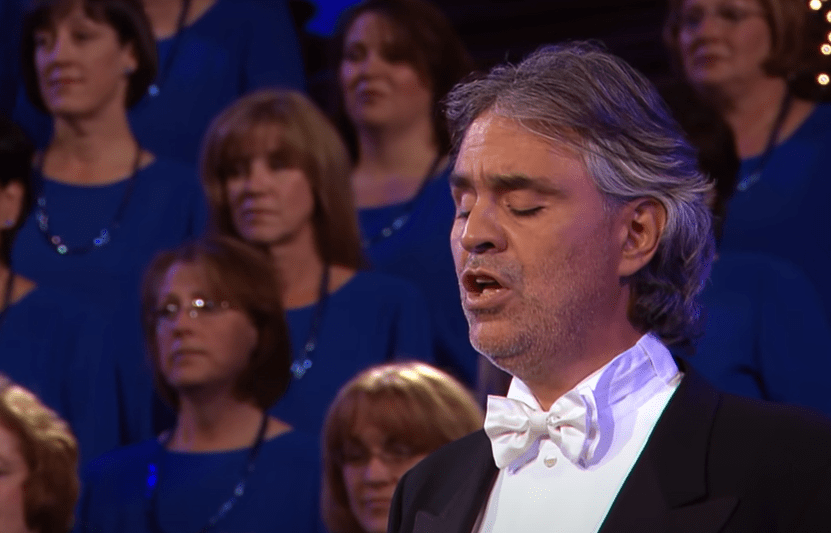
Hear a beautiful rendition of the Lord’s Prayer by the world-renowned Italian tenor, Andrea Bocelli.

Discussions

Psalm 104:33 and the Lord’s Prayer share common spiritual themes, despite their different focuses.

  1. Praise and Worship:
    • Psalm 104:33 expresses a commitment to lifelong praise and worship of God. This is in harmony with the adoration that begins the Lord’s Prayer: “Our Father in heaven, hallowed be your name.” Both passages call the believer to recognize and revere God’s holy name and nature.
  2. Acknowledgment of God’s Sovereignty:
    • The Psalmist’s vow to sing to the Lord all his life acknowledges God’s enduring sovereignty, which is a sentiment that aligns with “Your kingdom come, your will be done,” from the Lord’s Prayer, highlighting God’s ultimate rule over all creation.
  3. Personal Devotion:
    • Both passages reflect personal devotion and commitment. The Psalmist pledges personal, perpetual praise, while the Lord’s Prayer is a personal commitment to uphold God’s will and seek His provision and forgiveness daily.
  4. The Eternal Perspective:
    • “As long as I live” from the Psalm suggests an eternal perspective on God’s worthiness to be praised, which corresponds with “forever” in the doxology often added at the end of the Lord’s Prayer: “For yours is the kingdom, and the power, and the glory, forever.”
  5. Daily Living:
    • The daily aspects of the Christian life are evident in both texts. The Psalmist’s daily act of singing to God parallels the daily petition for bread in the Lord’s Prayer, symbolizing a day-by-day reliance on God for both physical and spiritual sustenance.
  6. Joyful Obedience:
    • Singing to the Lord can be seen as an act of joyful obedience, which is what the Lord’s Prayer guides believers towards—a life of obedience to God’s will, seeking His kingdom above all else.

In essence, Psalm 104:33 and the Lord’s Prayer both guide believers into a relationship with God that is marked by reverence, continuous praise, and the pursuit of a life aligned with God’s will and character. They encourage a worshipful heart posture that permeates all aspects of life.

“O give thanks unto the LORD; for he is good: because his mercy endureth for ever.” Psalm 118:1

This expression of heart-felt thanks is taken from Psalm 118:1.

HebrewEnglishValue of Hebrew Word
הוֹד֣וּ
hō-w-ḏū
Oh give thanks21
לַיהוָ֣ה
Yah-weh
to Yahweh56
כִּי־
kî-
for30
ט֑וֹב
ṭō-wḇ;
[He is] good17
כִּ֖י
for30
לְעוֹלָ֣ם
lə-‘ō-w-lām
ever176
חַסְדּֽוֹ׃
ḥas-dōw.
His mercy [endures]78

The equivalent numerical value of the verse is the sum 408. The 408th composite number is 505 The divisors of 505 are in the set {1, 5, 101, 505}. The sum of the divisors is 612. Hence, the arithmetic mean of the divisors is 153.

Conclusion. When we pray the Lord’s Prayer, we give thanks to Yahweh and thus acknowledge that He is good and His mercy endures forever.