
Abstract
This paper explores the theological unity of Psalms 31–39 as a coherent spiritual arc, tracing the journey of the righteous sufferer through distress, repentance, endurance, and hope. It then considers the numerical observation that the sum of Psalm numbers 31–39 equals 315, a permutation of 153, and examines how this may function as a secondary witness within a broader biblical framework. The study argues that the textual movement of these psalms aligns closely with the pattern of Christ’s suffering and vindication, culminating in the eschatological gathering of the “chosen ones” associated with the number 153.
1. Introduction: Letting the Text Speak First
The aim of this study is not to replace exegesis with arithmetic, but to show how numeric structure—handled modestly—can confirm themes already present in Scripture.
Psalms 31–39, when read together, present a sustained reflection on the life of the faithful in a fallen world. These psalms are traditionally read individually, yet their sequential arrangement suggests a deeper unity.
Only after establishing this textual unity do we consider the numerical observation:
31 + 32 + 33 + 34 + 35 + 36 + 37 + 38 + 39 = 315
This number, in turn, relates to 153, a number associated in John 21:11 with the gathered fish, often interpreted symbolically as the fullness of the redeemed community.
2. The Arc of Psalms 31–39
When read sequentially, Psalms 31–39 form a clear spiritual progression:
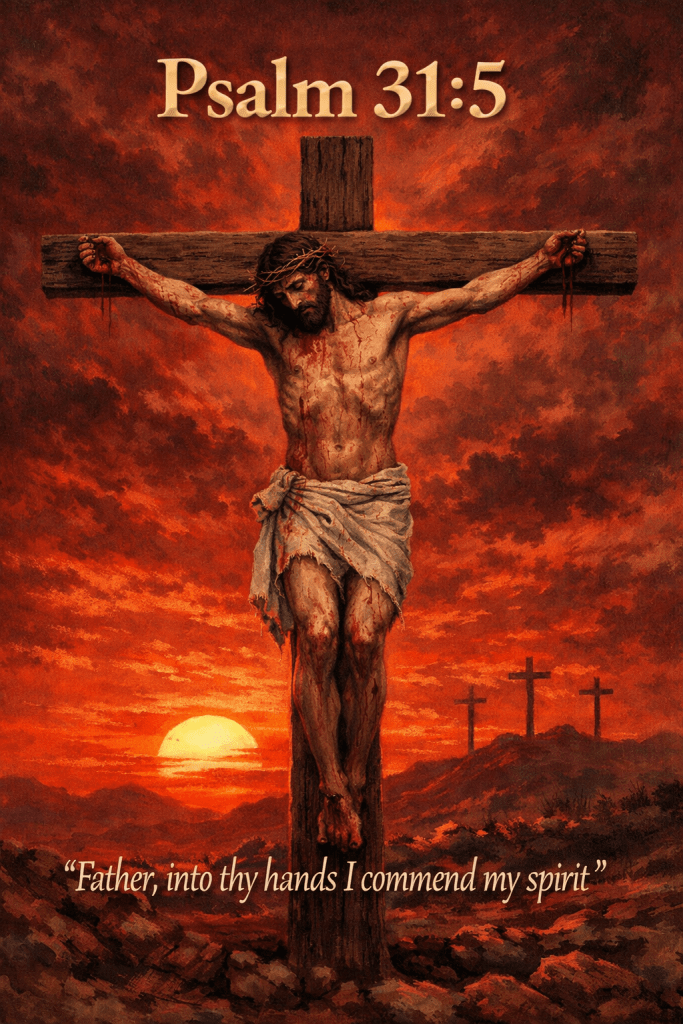
2.1 Psalm 31 — Trouble and Trust
The journey begins in distress. The psalmist is surrounded by enemies, fear, and social rejection, yet declares:
“Into thy hand I commit my spirit.”
This establishes the foundation: trust in God amid suffering.
2.2 Psalm 32 — Confession and Forgiveness
The focus shifts inward. The problem is not only external enemies, but internal sin.
“Blessed is he whose transgression is forgiven.”
Thus, repentance becomes central to the life of faith.
2.3 Psalm 33 — Praise and Sovereignty
The psalmist lifts his gaze from personal struggle to the universal rule of God.
God is Creator, King, and sovereign over history.
This introduces cosmic perspective.
2.4 Psalm 34 — Comfort and Divine Nearness
The emphasis becomes pastoral:
“The LORD is nigh unto them that are of a broken heart.”
God is not distant; He is present with the afflicted.
2.5 Psalm 35 — Injustice and Vindication
At the center of the arc lies unjust suffering.
The righteous one is:
- falsely accused
- hated without cause
- surrounded by enemies
This psalm strongly anticipates the messianic pattern of unjust suffering.
2.6 Psalm 36 — Human Sin and Divine Mercy
A sharp contrast emerges:
- human wickedness is deep
- God’s mercy is higher
“Thy mercy, O LORD, is in the heavens.”
Thus, the answer to evil is not human effort, but divine steadfast love.
2.7 Psalm 37 — Patient Waiting and Inheritance
The faithful are instructed:
“Fret not… trust in the LORD… wait patiently for him.”
This psalm introduces the theme of inheritance, promised to those who endure.
2.8 Psalm 38 — Deep Suffering and Burden
The tone becomes heavy again:
- physical pain
- emotional anguish
- spiritual burden
The believer experiences the weight of life under discipline and suffering.
2.9 Psalm 39 — Frailty and Final Hope
The sequence ends with reflection:
“My hope is in thee.”
Human life is short. Strength fades. But hope remains in God.
3. Summary of the Arc
The nine psalms together form the following progression:
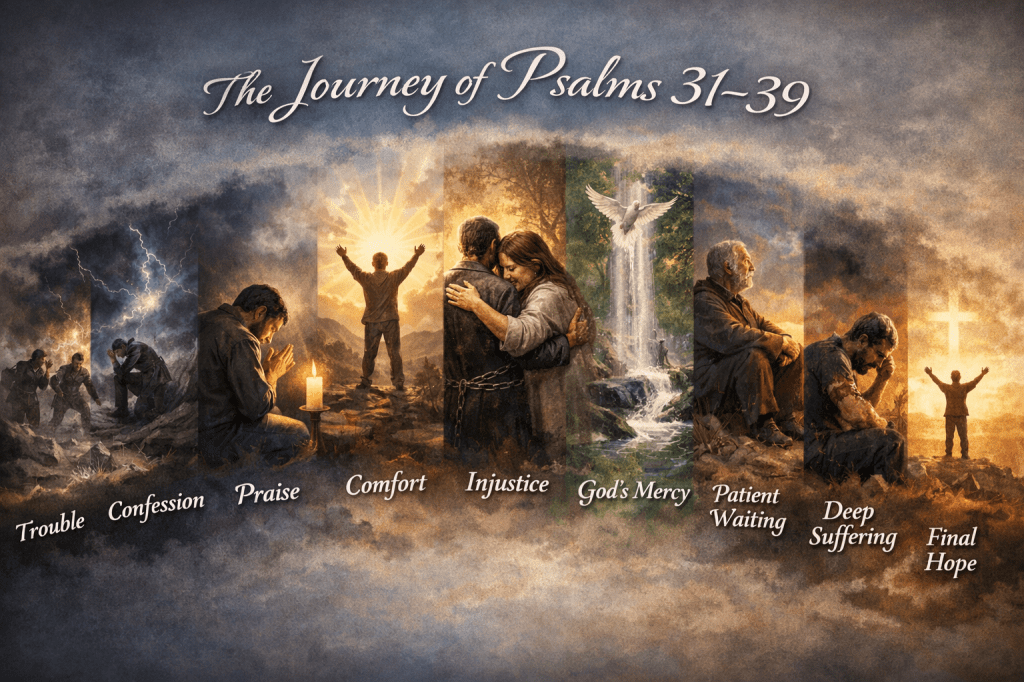
trouble → confession → praise → comfort → injustice → mercy → waiting → suffering → hope
Or more simply: this is path of the righteous in a fallen world.
This is not abstract theology. It is lived faith.
4. Christological Fulfillment
From a Christian perspective, this arc aligns closely with the life of Christ:
- Psalm 31 → quoted by Jesus at the cross
- Psalm 35 → hatred without cause
- Psalm 37 → inheritance of the meek
- Psalm 38–39 → suffering and human frailty
Together, these psalms form a portrait of the righteous sufferer, fulfilled ultimately in Jesus.
The pattern is clear:
suffering → trust → surrender → vindication
This is the pattern of the cross and resurrection.
5. The Numerical Witness: 315
The sum of Psalms 31–39 is 315:
Within our broader framework, 315 is a permutation of 153, and is associated with:
- the hour of Christ’s death (3:15 pm tradition)
- the moment of surrender (“Into thy hands…”)
Thus, 315 becomes a signature of sacrifice.
Importantly, this is not the basis of interpretation, but a confirmation:
The text already presents a pattern of suffering and surrender. The number 315 echoes that same pattern.
6. The Jasper Throne (Revelation 4:3)
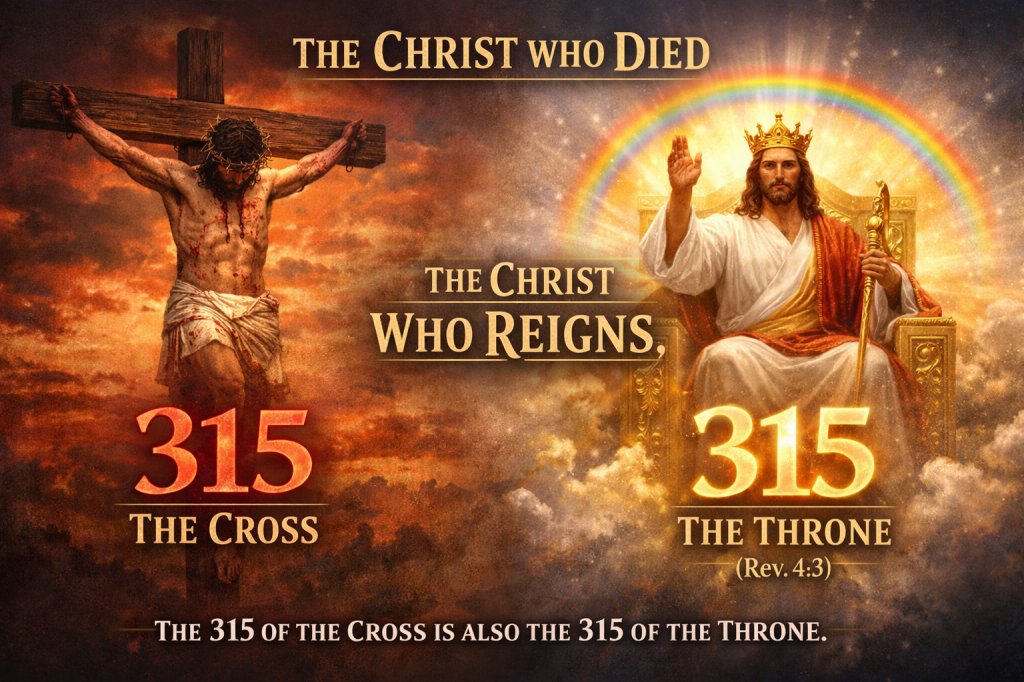
The Greek word:
ἰάσπιδι (iaspidi) — “jasper”
has an isopsephy value of 315.
This word describes the One seated on the throne in heaven.
And he that sat was to look upon like a jasper and a sardine stone: and there was a rainbow round about the throne, in sight like unto an emerald. (Revelation 4:3)
This creates a profound connection:
- 315 (Psalms 31–39) → suffering and surrender
- 315 (jasper) → divine enthronement
Thus, the number associated with the cross is also associated with the throne.
In biblical theology: The Lamb who was slain is the One who reigns.
7. From 315 to 153: Sacrifice and Harvest
In John 21:11, the disciples catch 153 fish.
Simon Peter went up, and drew the net to land full of great fishes, an hundred and fifty and three: and for all there were so many, yet was not the net broken. (John 21:11)
This number has long been associated with:
- completeness
- fullness
- the gathering of the redeemed
Within this framework:
- 315 = sacrifice
- 153 = harvest
Thus:
There is no 153 harvest without the 315 sacrifice.
This aligns perfectly with the New Testament:
- Christ dies → then gathers His people
- the cross → then the church
- sacrifice → then fulfillment
A further observation may be noted as a confirming numerical witness within Revelation 7 itself. The identifiers of verses 3 and 4—where the servants of God are first sealed and then numbered as one hundred and forty-four thousand—are 76 and 77 respectively, which together sum to 153.
3 Saying, Hurt not the earth, neither the sea, nor the trees, till we have sealed the servants of our God in their foreheads. 4 And I heard the number of them which were sealed: and there were sealed an hundred and forty and four thousand of all the tribes of the children of Israel. (Revelation 7: 3-4)
Sum of Verse Identifiers = (66+7+3)+(66+7+4) = 76 + 77 = 153.
While this does not establish doctrine, it functions within the present framework as a secondary confirmation of the theological unity already evident in the text: that the sealed servants of God belong to the same reality as the gathered people symbolized by the 153 fish in John 21. In this way, the act of sealing (Revelation 7:3) and the act of numbering (Revelation 7:4) converge numerically in the number of fulfillment, suggesting that those marked by God are also those gathered by the Son. Thus, the movement from sacrifice (315) to harvest (153) finds a final and elegant resonance within the sealing vision itself.
8. Theological Synthesis
We can now summarize the full pattern:
Textual Level
Psalms 31–39 describe the life of the righteous sufferer:
- trust
- repentance
- endurance
- hope
Christological Level
This pattern is fulfilled in Jesus:
- unjust suffering
- complete surrender
- final vindication
Numerical Level (Secondary Witness)
- 315 → sacrifice (cross)
- 315 → throne (Revelation)
- 153 → harvest (John 21)
Unified Message
The path to glory passes through suffering.
The cross precedes the harvest.
The One who surrendered is now enthroned.
9. Conclusion
Psalms 31–39 form a powerful and coherent spiritual journey.
They teach that:
- life is difficult
- sin is real
- suffering is unavoidable
- but God is faithful
When read in light of Christ, they reveal: the way of the Son is the way of trust through suffering into glory
The numerical observation that these psalms sum to 315 does not create this meaning—it confirms it.
And when placed alongside 153, the message becomes complete.
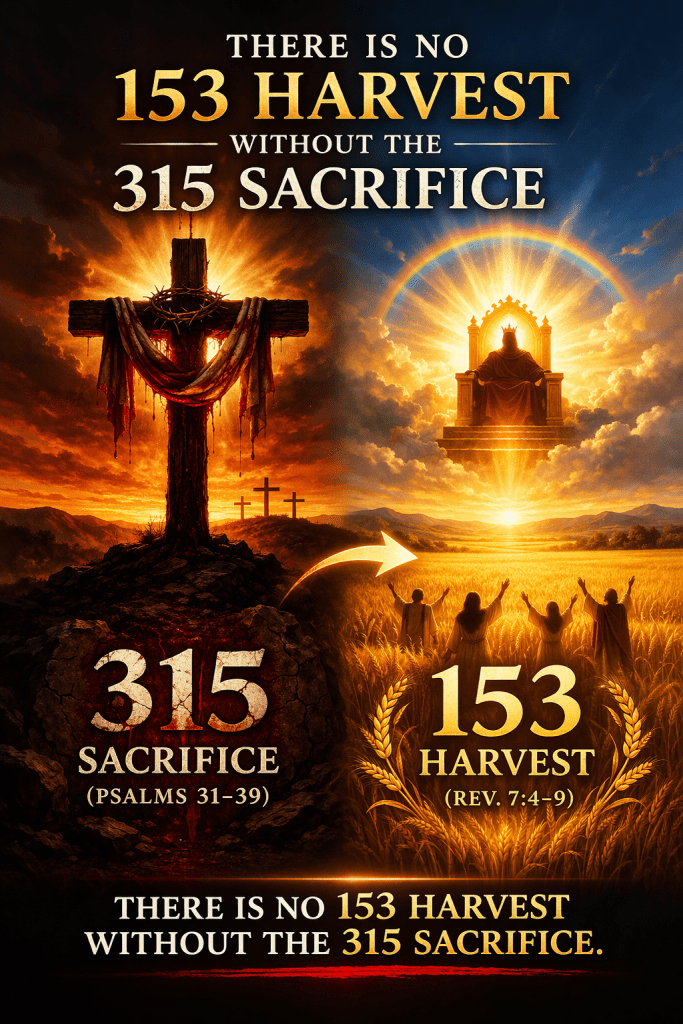
The sacrifice of Christ (315) leads to the gathering of His people (153).
- The cross is not the end.
- The cross leads to the throne.
- And from the throne comes the harvest.

 The Lord's Prayer: A Mathematician's Creed