
In Psalm 104:33 we read “I will sing to the Lord all my life; I will sing praise to my God as long as I live.” (NIV).
Given that the Book of Psalms is the 19th book of the Bible, the identifier of Psalm 104:33 is 19+104+33=156. The 156th composite number is 203, and the Euler Totient function evaluated at 203 is 168. That is, the number of positive integers up to 203 that are relatively prime to 203 is 168. But 168 is the identifier of the Lord’s Prayer in the Gospel of Luke.
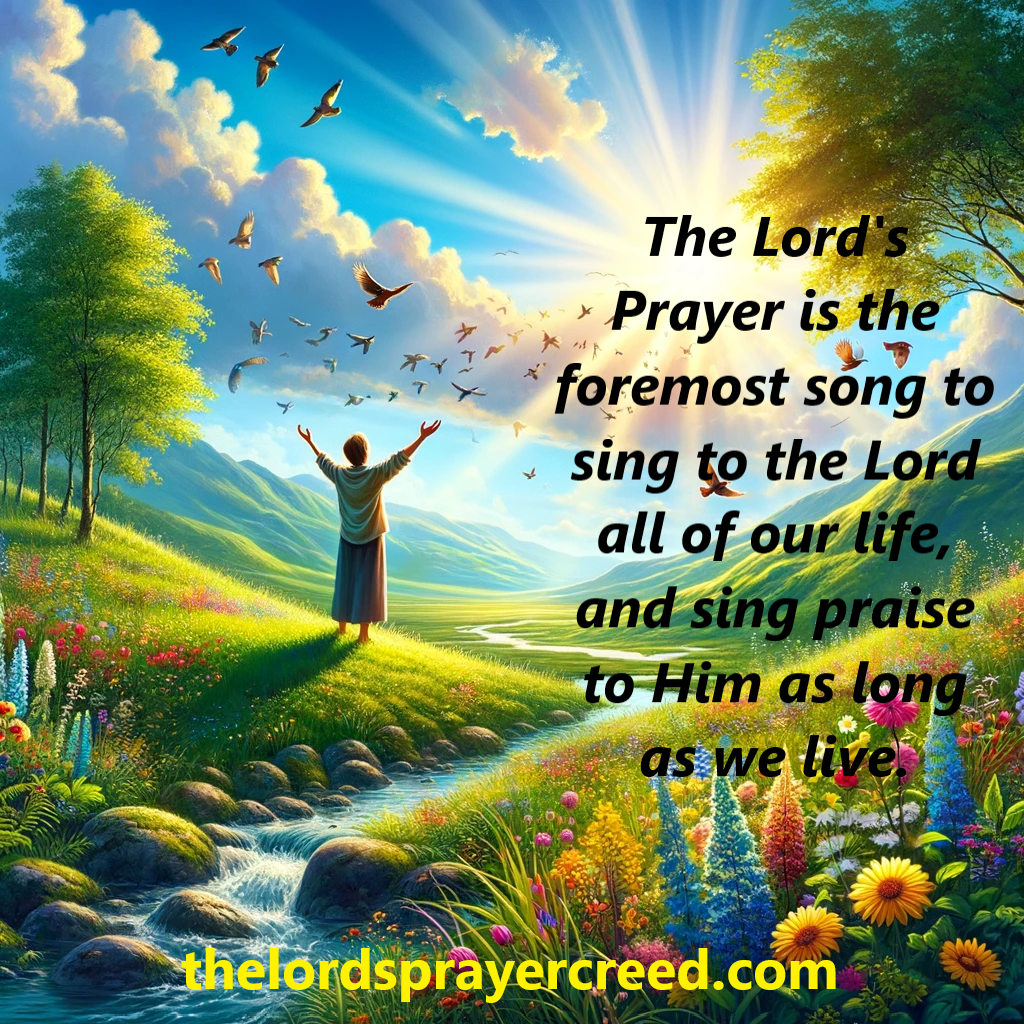
Conclusion. The Lord’s Prayer is the foremost song to sing to the Lord all of our life, and sing praise to Him as long as we live.
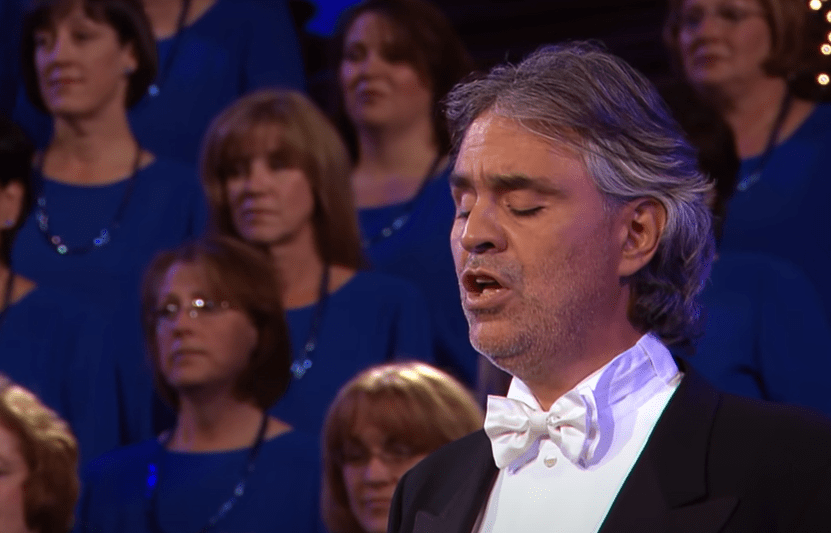
Hear a beautiful rendition of the Lord’s Prayer by the world-renowned Italian tenor, Andrea Bocelli.
Discussions
Psalm 104:33 and the Lord’s Prayer share common spiritual themes, despite their different focuses.
- Praise and Worship:
- Psalm 104:33 expresses a commitment to lifelong praise and worship of God. This is in harmony with the adoration that begins the Lord’s Prayer: “Our Father in heaven, hallowed be your name.” Both passages call the believer to recognize and revere God’s holy name and nature.
- Acknowledgment of God’s Sovereignty:
- The Psalmist’s vow to sing to the Lord all his life acknowledges God’s enduring sovereignty, which is a sentiment that aligns with “Your kingdom come, your will be done,” from the Lord’s Prayer, highlighting God’s ultimate rule over all creation.
- Personal Devotion:
- Both passages reflect personal devotion and commitment. The Psalmist pledges personal, perpetual praise, while the Lord’s Prayer is a personal commitment to uphold God’s will and seek His provision and forgiveness daily.
- The Eternal Perspective:
- “As long as I live” from the Psalm suggests an eternal perspective on God’s worthiness to be praised, which corresponds with “forever” in the doxology often added at the end of the Lord’s Prayer: “For yours is the kingdom, and the power, and the glory, forever.”
- Daily Living:
- The daily aspects of the Christian life are evident in both texts. The Psalmist’s daily act of singing to God parallels the daily petition for bread in the Lord’s Prayer, symbolizing a day-by-day reliance on God for both physical and spiritual sustenance.
- Joyful Obedience:
- Singing to the Lord can be seen as an act of joyful obedience, which is what the Lord’s Prayer guides believers towards—a life of obedience to God’s will, seeking His kingdom above all else.
In essence, Psalm 104:33 and the Lord’s Prayer both guide believers into a relationship with God that is marked by reverence, continuous praise, and the pursuit of a life aligned with God’s will and character. They encourage a worshipful heart posture that permeates all aspects of life.

 The Lord's Prayer: A Mathematician's Creed